In a sheet metal fabrication shop, the bending press is the heart of production. Flat sheets enter, and formed parts emerge: brackets, enclosures, chassis, and countless other components that will be assembled into machines, vehicles, and buildings. The quality of these Sheet Metal Fabrication Parts depends on the precision of the bending process. A few degrees of error in a bend angle can mean a part that does not fit, a door that does not close, or a structure that fails inspection. For decades, manual press brakes relied on the operator's skill to position the sheet and control the bend. But manual bending is inherently variable. Two operators can produce two different results from the same drawing. CNC bending has changed this equation. A CNC bending machine uses computer numerical control to position the sheet, control the bend angle, and manage the entire bending sequence with a precision that no human can match.
The importance of CNC bending for Sheet Metal Fabrication Parts quality cannot be overstated. It is the difference between a part that fits and a part that is scrapped. It is the difference between a production run that is consistent and one that is plagued with variability. And it is the difference between a fabrication shop that can compete on quality and one that competes only on price. This article will examine why CNC bending is critical for parts quality. We will cover the technology of CNC bending, the factors that determine bend quality, the role of tooling and material, and the quality control measures that ensure every part meets specification. We will also provide detailed specifications for our Sheet Metal Fabrication Parts from our factory at Cangzhou Shengsen Metal Products Co., Ltd.
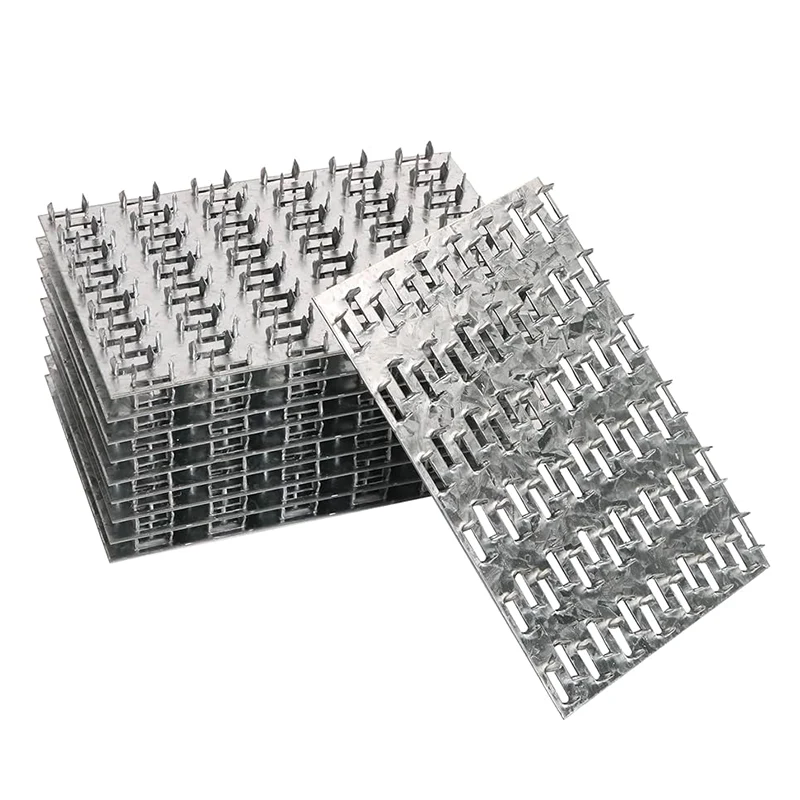
The fundamental difference between CNC bending and manual bending is the source of control. In a manual press brake, the operator controls the position of the back gauge, the depth of the ram stroke, and the bend angle. The operator's skill, experience, and attention determine the quality of the bend. This is not to say that skilled operators cannot produce high-quality work; they can. But manual bending is inherently variable. The operator may misread a dimension, the back gauge may slip, or the material may spring back differently than expected. These variations accumulate, and the result is a part that may be out of tolerance. CNC bending removes the operator from the control loop. The machine's computer controls the position of the back gauge, the ram stroke, and the bend angle. The operator's role is to load the sheet, initiate the cycle, and unload the finished part. The machine does the rest with a precision and repeatability that is impossible to achieve manually.
The core technology of a CNC bending machine is the CNC controller. This controller stores a program that defines the bending sequence: the position of the back gauge for each bend, the depth of the ram stroke, and the bend angle. The controller also compensates for material springback, which is the tendency of the material to return partially to its original shape after the bending force is removed. Springback compensation is critical for achieving accurate bend angles. The controller calculates the required overbend based on the material type, thickness, and bend radius, and it adjusts the ram stroke accordingly. The table below compares the key characteristics of manual and CNC bending.
| Characteristic | Manual Bending | CNC Bending |
| Control Source | Operator | CNC Controller |
| Bend Angle Accuracy | +/- 1° to 2° | +/- 0.1° to 0.5° |
| Repeatability | Low | High |
| Springback Compensation | Manual adjustment | Automatic calculation |
| Setup Time | Long | Short (program recall) |
| Skill Requirement | High | Moderate |
| Suitable for Complex Parts | Limited | Excellent |
At Cangzhou Shengsen Metal Products Co., Ltd., our factory uses CNC bending machines for the production of our Sheet Metal Fabrication Parts. We have invested in advanced CNC press brakes with multi-axis back gauges and automatic tool changers. Our goal is to provide our customers with parts that meet the tightest tolerances and the highest quality standards.
The bend angle is the angle formed between the two flanges of a bent part. For a simple 90-degree bracket, the bend angle is 90 degrees. For a more complex part, the bend angle may be 45 degrees, 60 degrees, or any other angle specified by the design. The accuracy of the bend angle is critical because it determines whether the part will fit with other components. If the bend angle is too large or too small, the part will not align properly with mating parts, and the assembly will be difficult or impossible to complete. In some cases, a small error in the bend angle can be tolerated; in others, it can cause a failure. The table below illustrates the effect of bend angle error on the fit of a simple bracket.
| Bend Angle Error | Flange Position Error (for 100mm flange) | Assembly Impact |
| 0.5° | 0.87 mm | Minor; may be within tolerance |
| 1.0° | 1.75 mm | Moderate; may require rework |
| 2.0° | 3.49 mm | Significant; part may not fit |
| 5.0° | 8.72 mm | Severe; part will not fit |
The table shows that even a small error in the bend angle can result in a significant error in the position of the flange. For a 100mm flange, a 2-degree error results in a 3.5mm error at the tip of the flange. This can be the difference between a part that fits and a part that does not. CNC bending minimizes this error by precisely controlling the ram stroke and compensating for springback. At our factory, we use CNC bending machines that can hold bend angles to within +/- 0.1 degrees. This level of accuracy ensures that our Sheet Metal Fabrication Parts fit together properly and function as designed.
Repeatability is the ability of a process to produce the same result over and over again. In sheet metal fabrication, repeatability means that the first part and the thousandth part are identical. This is the foundation of production quality. Without repeatability, every part must be inspected individually, and there is no guarantee that the parts will fit together. With repeatability, the manufacturer can be confident that the parts will meet specification without the need for 100% inspection. CNC bending is inherently repeatable because the machine follows a program. Once the program is set, the machine will produce the same bend angle, the same flange length, and the same part geometry every time. The table below compares the repeatability of manual and CNC bending.
| Parameter | Manual Bending | CNC Bending |
| Bend Angle Variation (within a batch) | +/- 1° to 2° | +/- 0.1° to 0.5° |
| Flange Length Variation | +/- 0.5 mm | +/- 0.1 mm |
| Part-to-Part Consistency | Low | High |
| Inspection Requirement | 100% inspection | Sampling inspection |
| Scrap Rate | Higher | Lower |
At Cangzhou Shengsen Metal Products Co., Ltd., our factory is equipped with CNC bending machines that deliver exceptional repeatability. We have the capability to produce large batches of Sheet Metal Fabrication Parts with consistent quality. Our quality control system includes statistical process control (SPC) to monitor the repeatability of our bending process and to identify any trends that could affect part quality.
The tooling—the punch and die—is a critical factor in bend quality. The punch is the upper tool that presses the sheet into the die. The die is the lower tool that supports the sheet and determines the bend radius. The selection of the correct tooling for the material and the desired bend radius is essential for achieving a quality bend. If the tooling is not matched to the material, the bend may be inaccurate, the material may crack, or the tooling may be damaged. The most important tooling parameters are the punch tip radius, the die opening width, and the die angle. The punch tip radius determines the inside bend radius of the part. The die opening width determines the required bending force and the minimum flange length. The die angle determines the angle to which the material can be bent. The table below summarizes the tooling selection criteria for common materials.
| Material | Thickness (mm) | Recommended Die Opening (mm) | Recommended Punch Radius (mm) |
| Mild Steel | 1.0 | 8 | 1.0 |
| Mild Steel | 2.0 | 16 | 2.0 |
| Stainless Steel | 1.0 | 10 | 1.5 |
| Stainless Steel | 2.0 | 20 | 3.0 |
| Aluminum | 1.0 | 8 | 1.0 |
| Aluminum | 2.0 | 16 | 2.0 |
At our factory, we maintain a comprehensive inventory of tooling for our CNC bending machines. We have punches and dies in a range of sizes and configurations to suit different materials and bend requirements. Our tooling is precision-ground and maintained to ensure consistent performance. We also have the capability to design and manufacture custom tooling for special applications.
Material variation is one of the most challenging factors in sheet metal bending. Even when the material meets the specified grade and thickness, there can be variations in its mechanical properties, such as yield strength, tensile strength, and ductility. These variations affect the springback behavior of the material, which in turn affects the bend angle. A material with a higher yield strength will spring back more than a material with a lower yield strength. If the CNC bending machine does not compensate for this variation, the bend angle will be inaccurate. The table below summarizes the effect of material variation on springback and bend angle.
| Material Property | Variation | Effect on Springback | Effect on Bend Angle |
| Yield Strength | +10% | Increase | Bend angle decreases (more springback) |
| Yield Strength | -10% | Decrease | Bend angle increases (less springback) |
| Thickness | +5% | Increase | Bend angle decreases |
| Thickness | -5% | Decrease | Bend angle increases |
| Grain Direction | Parallel vs. Perpendicular | Varies | Varies |
At Cangzhou Shengsen Metal Products Co., Ltd., our factory addresses material variation through a combination of material certification, incoming inspection, and CNC programming. We verify the mechanical properties of the material before it enters production, and we adjust our CNC programs to compensate for the specific characteristics of each batch. This proactive approach ensures that our Sheet Metal Fabrication Parts meet the required bend angle tolerances regardless of material variation.
Quality control is the final safeguard for CNC bending excellence. Even with the best equipment and the most skilled operators, errors can occur. A comprehensive quality control program detects these errors before they become defects. The key elements of a quality control program for CNC bending are first article inspection, in-process inspection, and final inspection. First article inspection is performed on the first part of a production run. It verifies that the part meets all drawing specifications, including bend angles, flange lengths, and hole positions. In-process inspection is performed periodically during the production run. It verifies that the process remains in control and that the parts continue to meet specification. Final inspection is performed on the completed parts before they are shipped. It verifies that the parts meet all requirements and that they are free from defects. The table below summarizes the quality control measures and their frequency.
| Inspection Type | Frequency | What Is Checked | Acceptance Criteria |
| First Article Inspection | First part of production run | All dimensions, bend angles, hole positions | Drawing specifications |
| In-Process Inspection | Every 2 hours | Bend angles, flange lengths | SPC control limits |
| Final Inspection | Before shipment | Visual defects, critical dimensions | Customer requirements |
| Dimensional Report | Per batch | Key dimensions | Drawing specifications |
At our factory, we have implemented a rigorous quality control program for our CNC bending operations. We use calibrated measuring instruments, including digital protractors and coordinate measuring machines (CMM), to verify the accuracy of our bends. We also maintain detailed records of all inspections, providing our customers with full traceability. Our commitment to quality has made us a trusted supplier of Sheet Metal Fabrication Parts for customers around the world.
Question 1: What is the typical bend angle tolerance for CNC bending?
Answer: The typical bend angle tolerance for CNC bending is +/- 0.5 degrees for standard applications and +/- 0.1 degrees for high-precision applications. The achievable tolerance depends on the material, the tooling, and the machine. At Cangzhou Shengsen Metal Products Co., Ltd., we can achieve bend angle tolerances as tight as +/- 0.1 degrees for our Sheet Metal Fabrication Parts.
Question 2: How does springback affect bend accuracy, and how is it compensated?
Answer: Springback is the tendency of the material to return partially to its original shape after the bending force is removed. It causes the bend angle to be less than the angle set on the machine. CNC bending machines compensate for springback by overbending the material. The amount of overbend is calculated based on the material type, thickness, and yield strength. Our factory uses advanced CNC controllers that automatically calculate and apply springback compensation.
Question 3: What is the minimum flange length for CNC bending?
Answer: The minimum flange length depends on the die opening width. As a general rule, the minimum flange length is approximately 4 times the die opening. For a 16mm die opening, the minimum flange length is 64mm. If the flange is shorter than this, the punch may not be able to form the bend properly. Our engineering team can advise on the optimal die opening and minimum flange length for your specific part.
Question 4: Can CNC bending produce bends with a large radius?
Answer: Yes, CNC bending can produce bends with a large radius. This is achieved by using a punch with a large tip radius or by using a special bending technique called "air bending." Air bending allows the material to be bent to a radius that is larger than the punch tip radius. Our factory has the tooling and the expertise to produce large-radius bends in a range of materials.
Question 5: How do I ensure that my Sheet Metal Fabrication Parts meet the required bend tolerances?
Answer: To ensure that your Sheet Metal Fabrication Parts meet the required bend tolerances, work with a manufacturer that uses CNC bending machines and has a comprehensive quality control program. Provide clear drawings with defined tolerances. Discuss the material and the application with the manufacturer to ensure that the correct tooling and bending parameters are selected. At Cangzhou Shengsen Metal Products Co., Ltd., we work closely with our customers to ensure that every part meets their requirements.
CNC bending is critical for Sheet Metal Fabrication Parts quality because it delivers the precision, repeatability, and consistency that manual bending cannot match. It ensures that bend angles are accurate, that parts fit together properly, and that production runs are uniform. It reduces scrap, rework, and inspection costs. And it enables the production of complex parts that would be difficult or impossible to produce manually. At Cangzhou Shengsen Metal Products Co., Ltd., our factory is equipped with advanced CNC bending machines and a comprehensive quality control system. We have the expertise and the experience to produce high-quality Sheet Metal Fabrication Parts for a wide range of industries. Whether you need simple brackets or complex enclosures, we can meet your requirements.
Our commitment to quality and customer satisfaction has made us a trusted partner for businesses around the world. We invite you to contact us to discuss your Sheet Metal Fabrication Parts requirements. We can provide samples, quotes, and design assistance. Let us show you how CNC bending can improve the quality of your metal parts.
Contact Cangzhou Shengsen Metal Products Co., Ltd. today to discuss your Sheet Metal Fabrication Parts requirements and discover how our CNC bending capabilities can meet your quality standards.