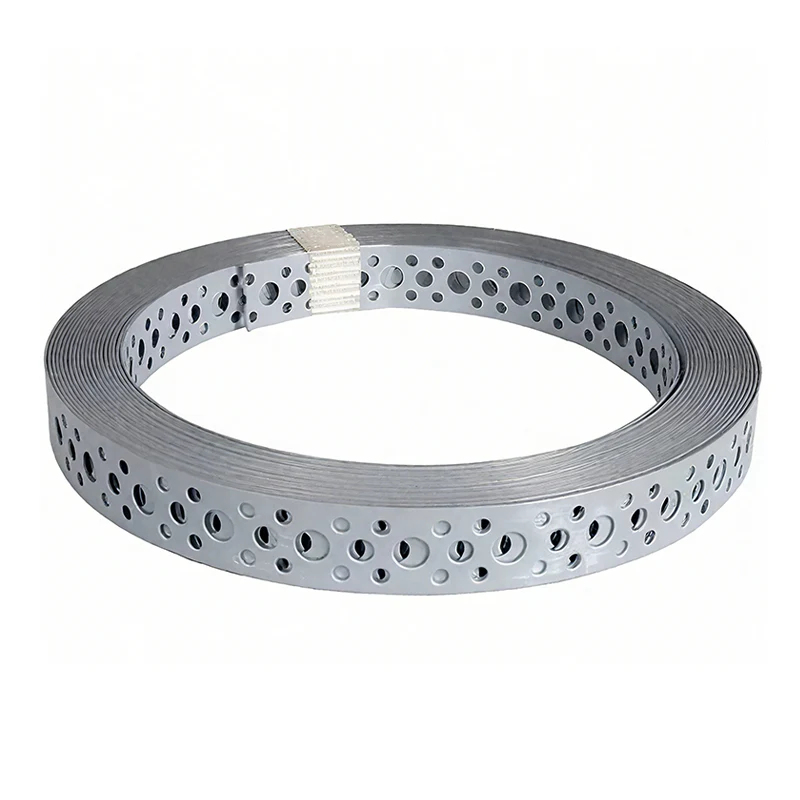
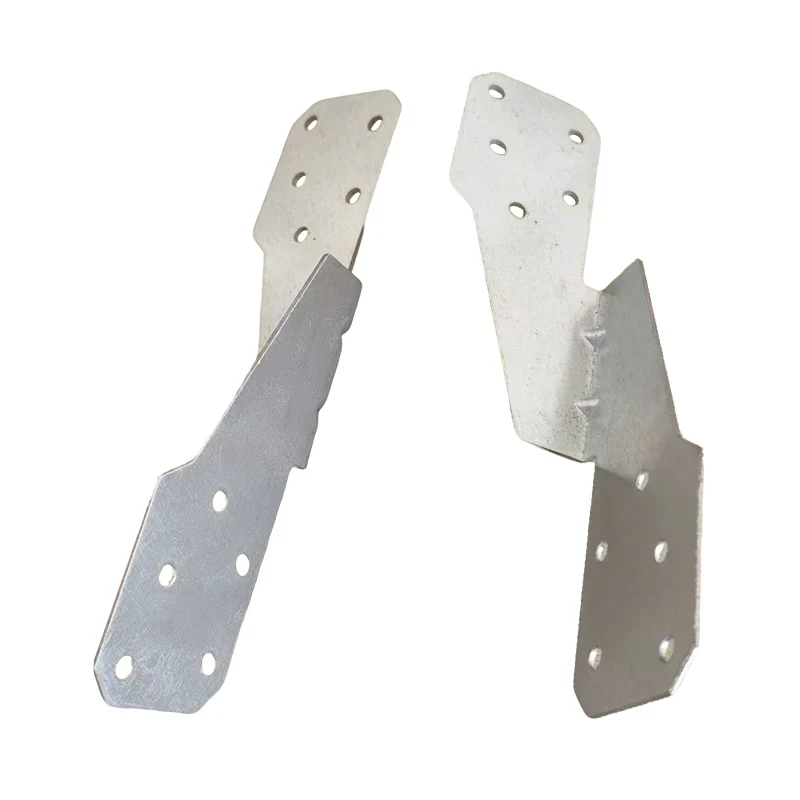
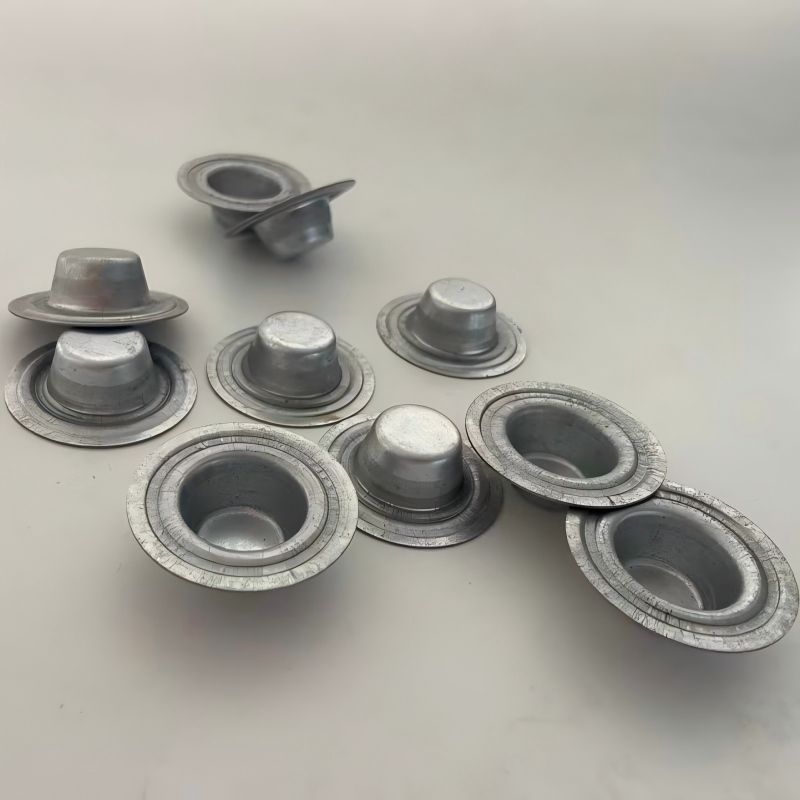
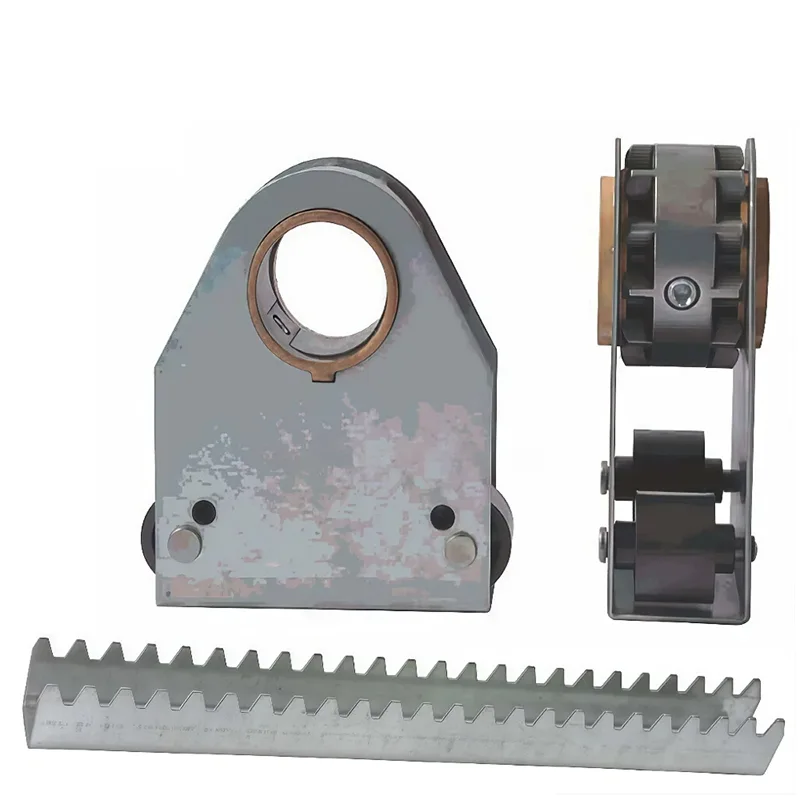
A procurement engineer is evaluating two suppliers for a large order of Sheet Metal Fabrication Parts. Both suppliers provide samples that look identical. Both quote similar prices. Both promise on-time delivery. But when the parts arrive and go through inspection, a clear difference emerges. One supplier's parts have weld beads that vary in height and width from part to part. Some have small porosity defects that fail the leak test. The other supplier's parts are remarkably consistent. Every weld bead is uniform, every penetration depth is correct, and every part passes inspection on the first try. The difference is robotic welding. One supplier relies on manual welding, where quality depends on the skill and attention of the welder. The other supplier has invested in robotic welding cells, where the weld parameters are programmed and repeated with precision. For buyers, understanding the role of robotic welding in Sheet Metal Fabrication Parts is essential for selecting a supplier that can deliver consistent quality at scale.
This guide is written for procurement managers, engineers, and quality inspectors who are sourcing Sheet Metal Fabrication Parts. We will explain what robotic welding is, why it matters for parts quality, how it affects cost and lead time, what specifications to include in a purchase order, and how to evaluate a supplier's robotic welding capability. We will also provide detailed product parameters from our factory at Cangzhou Shengsen Metal Products Co., Ltd. Whether you are sourcing brackets, enclosures, chassis, or structural frames, this guide will help you understand how robotic welding can improve the quality and reliability of your parts.
Robotic welding is a process in which a robotic arm is used to perform welding operations. The robotic arm holds a welding torch or gun, and it moves along a programmed path to create the weld. The welding parameters—current, voltage, travel speed, wire feed rate, and gas flow—are programmed into the robot's controller. Once the program is set, the robot will repeat the weld with a high degree of precision, part after part. In sheet metal fabrication, robotic welding is used for a wide range of operations, including MIG (metal inert gas) welding, TIG (tungsten inert gas) welding, and spot welding. It is typically used for parts that are produced in large volumes and that have welds that can be accessed by the robot arm. The table below summarizes the common robotic welding processes used in sheet metal fabrication.
| Process | Description | Typical Application | Advantages |
| Robotic MIG Welding | Wire-fed welding with shielding gas | Brackets, frames, enclosures | High deposition rate, versatile |
| Robotic TIG Welding | Tungsten electrode with filler wire | Thin sheet, precision parts | High quality, precise |
| Robotic Spot Welding | Resistance welding at discrete points | Chassis, panels, assemblies | Fast, low heat distortion |
| Robotic Laser Welding | Laser beam for deep penetration | High-precision, thin materials | Minimal distortion, high speed |
At Cangzhou Shengsen Metal Products Co., Ltd., our factory has invested in robotic welding cells for the production of our Sheet Metal Fabrication Parts. We use robotic MIG welding for most of our steel and aluminum parts, and robotic TIG welding for thin-gauge and precision components. Our robots are programmed by experienced welding engineers, and the programs are validated with test welds before production begins. Our goal is to provide our customers with parts that meet the highest standards of weld quality and consistency.
Weld consistency is the ability to produce the same weld quality on every part, every time. It is the most important factor in determining the reliability and performance of Sheet Metal Fabrication Parts. A weld that is inconsistent can have variations in penetration, bead width, bead height, and porosity. These variations can lead to weak joints, leaks, and premature failure. In critical applications, such as structural frames, pressure vessels, or safety components, an inconsistent weld can be a safety hazard. Robotic welding delivers consistency because the robot follows the same programmed path with the same parameters for every part. The human welder, by contrast, is subject to fatigue, distraction, and variations in technique. Even the most skilled welder cannot maintain the same level of consistency as a robot over a long production run. The table below compares the consistency of manual and robotic welding.
| Factor | Manual Welding | Robotic Welding |
| Weld Bead Width Variation | +/- 1.5 mm | +/- 0.2 mm |
| Weld Bead Height Variation | +/- 1.0 mm | +/- 0.15 mm |
| Penetration Variation | +/- 20% | +/- 5% |
| Porosity Rate | 2-5% | < 1% |
| Repeatability | Low to moderate | High |
| Dependence on Operator Skill | High | Low |
At our factory, we have measured the weld consistency of our robotic welding cells against our previous manual welding operations. The robotic cells reduced weld bead width variation by 87% and porosity rate by 80%. This improvement in consistency has translated directly into higher first-pass yield and fewer customer complaints. Our customers can rely on our Sheet Metal Fabrication Parts to meet the same specifications, part after part, order after order.
Robotic welding affects throughput and lead time in several ways. First, the robot can weld faster than a human welder. The robot does not need to stop to reposition, rest, or change electrodes as frequently. It can maintain a consistent travel speed and wire feed rate, which results in a higher deposition rate. Second, the robot can operate continuously, 24 hours a day, if necessary. It does not get tired, and it does not need breaks. This continuous operation increases the effective capacity of the welding cell. Third, the robot can be programmed to weld multiple parts in a single cycle, using a turntable or a shuttle table. This reduces the idle time between parts and increases the overall throughput. The table below compares the throughput of manual and robotic welding for a typical sheet metal part.
| Metric | Manual Welding | Robotic Welding |
| Welding Speed (mm/min) | 300 - 500 | 500 - 800 |
| Arc Time per Part (min) | 8 | 5 |
| Parts per Hour | 6 | 10 |
| Uptime (%) | 70 - 80 | 90 - 95 |
| Daily Output (8 hours) | 48 parts | 80 parts |
| Lead Time Reduction | Baseline | 30-40% shorter |
At Cangzhou Shengsen Metal Products Co., Ltd., our robotic welding cells have increased our welding throughput by over 60% compared to our previous manual operations. This increased capacity allows us to handle larger orders and to shorten lead times for our customers. We also use our robotic cells to run overnight and on weekends, which further increases our effective capacity and reduces the risk of delivery delays.
When purchasing Sheet Metal Fabrication Parts that will be robotically welded, the buyer should include detailed specifications in the purchase order to ensure that the parts meet the required performance and quality standards. The key specifications are the material, the thickness, the weld type, the weld size, the weld quality standard, the inspection method, and the documentation. The material should be specified by grade (e.g., mild steel, stainless steel, aluminum). The thickness should be specified in millimeters. The weld type should be specified (e.g., MIG, TIG, spot). The weld size should be specified by leg length or throat thickness. The weld quality standard should be specified (e.g., ISO 5817, AWS D1.1). The inspection method should be specified (e.g., visual, radiographic, ultrasonic). The documentation should be specified (e.g., material certificates, inspection reports). The table below summarizes the specifications that should be included in a purchase order.
| Specification | Unit of Measure | Example |
| Material | Grade | Mild steel SPCC |
| Thickness | mm | 2.0 mm |
| Weld Type | Process | MIG |
| Weld Size | mm | 3 mm leg length |
| Weld Quality Standard | Standard | ISO 5817 Level C |
| Inspection Method | Type | Visual, dimensional |
| Documentation | Type | Material cert, inspection report |
At our factory, we work with our customers to ensure that all specifications are clearly defined and understood before production begins. We provide samples and first article inspection reports for approval. We also maintain detailed records of all welding parameters and inspections, providing full traceability for every order. Our goal is to deliver Sheet Metal Fabrication Parts that meet or exceed our customers' expectations.
Evaluating a supplier's robotic welding capability requires a focus on equipment, programming expertise, quality control, and experience. The supplier must have the right robotic welding equipment for the parts being produced. This includes the robot arm, the welding power source, the fixture, and the safety systems. The supplier must have experienced welding engineers who can program the robots and optimize the welding parameters. The supplier must have a quality control system that includes weld inspection and testing. And the supplier must have experience in producing similar parts for similar industries. The table below summarizes these evaluation criteria.
| Evaluation Criterion | What to Look For | Why It Matters |
| Equipment | Robotic welding cells, welding power sources, fixtures | Ensures capability to produce the parts |
| Programming Expertise | Experienced welding engineers, parameter optimization | Ensures weld quality and efficiency |
| Quality Control | Weld inspection, testing, documentation | Ensures consistent quality |
| Experience | Track record with similar parts and industries | Demonstrates capability and reliability |
| Capacity | Number of robotic cells, uptime | Ensures timely delivery of large orders |
At S-SEN, our factory has multiple robotic welding cells and a team of experienced welding engineers. We have been producing robotically welded Sheet Metal Fabrication Parts for over a decade, serving customers in the automotive, construction, and industrial equipment industries. We are ISO 9001 certified, and we maintain detailed records of all welding parameters and inspections. We invite you to evaluate us against these criteria and to consider us as your partner for robotically welded Sheet Metal Fabrication Parts.
The following table provides the key product parameters for our robotically welded Sheet Metal Fabrication Parts. These parts are designed for a wide range of applications, including brackets, enclosures, chassis, and structural frames. Our factory can also produce custom parts to meet specific requirements.
| Parameter | Specification Range | Notes |
| Material | Mild Steel, Stainless Steel, Aluminum | Selected for application |
| Thickness | 0.5 - 6.0 mm | Depends on material and application |
| Weld Type | MIG, TIG, Spot | Selected for material and joint design |
| Weld Size | 1 - 8 mm leg length | Depends on thickness and load |
| Weld Quality Standard | ISO 5817 Level B to D | Selected for application criticality |
| Inspection Method | Visual, Dimensional, Radiographic | Selected for quality requirements |
| Tolerance | +/- 0.2 mm | Precision fixtures for accuracy |
| Surface Finish | As-welded, Ground, Painted | Selected for appearance |
| MOQ | 100 pieces | Negotiable for large orders |
| Lead Time | 2 - 4 weeks | Depends on quantity and complexity |
At our factory, we manufacture our robotically welded Sheet Metal Fabrication Parts to meet these specifications and more. We can customize the material, thickness, weld type, and quality standard to suit your specific requirements. Our quality control system includes inspection of raw materials, in-process inspection, and final inspection before shipment. Our goal is to provide our customers with high-quality parts that meet their performance and reliability requirements.
Question 1: Is robotic welding always better than manual welding for sheet metal parts?
Answer: Robotic welding is generally better for parts that are produced in large volumes and that have welds that can be accessed by the robot. It provides higher consistency, higher throughput, and lower long-term cost. However, for small batches, prototypes, or parts with complex geometries that are difficult to fixture, manual welding may be more practical and cost-effective. The choice depends on the specific requirements of the part and the production volume.
Question 2: What is the typical weld quality achieved by robotic welding?
Answer: Robotic welding can achieve high weld quality, typically meeting ISO 5817 Level B or C. The weld bead is uniform, penetration is consistent, and porosity is minimal. The actual quality depends on the programming, the fixturing, the material, and the welding parameters. At Cangzhou Shengsen Metal Products Co., Ltd., we inspect our robotic welds to ensure they meet the specified quality standard.
Question 3: Can robotic welding be used for aluminum sheet metal parts?
Answer: Yes, robotic welding can be used for aluminum sheet metal parts. Aluminum requires specific welding parameters and often requires a push-pull wire feed system to handle the soft aluminum wire. Robotic MIG welding is commonly used for aluminum parts. Our factory has experience in robotic welding of aluminum and can advise on the best process for your parts.
Question 4: How do I know if a supplier has good robotic welding capability?
Answer: To assess a supplier's robotic welding capability, ask about their equipment, their programming expertise, their quality control system, and their experience with similar parts. Request samples and first article inspection reports. Visit the factory if possible to see the robotic cells in operation. A supplier with good robotic welding capability will be transparent about their processes and will welcome your evaluation.
Question 5: What is the typical lead time for robotically welded sheet metal parts?
Answer: The typical lead time for robotically welded Sheet Metal Fabrication Parts is 2 to 4 weeks after design approval. This includes the time for programming, fixturing, material procurement, and production. The lead time depends on the complexity of the part, the quantity ordered, and the availability of materials. At Cangzhou Shengsen Metal Products Co., Ltd., we work closely with our customers to meet their delivery requirements.
Robotic welding plays a critical role in the production of high-quality Sheet Metal Fabrication Parts. It delivers the consistency, throughput, and cost efficiency that manual welding cannot match. For buyers, understanding the role of robotic welding is essential for selecting a supplier that can meet their quality and delivery requirements. At Cangzhou Shengsen Metal Products Co., Ltd., our factory has the equipment, the expertise, and the experience to produce robotically welded Sheet Metal Fabrication Parts to the highest standards. We use advanced robotic cells, experienced welding engineers, and rigorous quality control to ensure that every part meets our customers' specifications.
Whether you are sourcing brackets, enclosures, chassis, or structural frames, we invite you to contact us to discuss your requirements. We can provide samples, technical data, and customized solutions. Our commitment to quality and customer satisfaction has made us a trusted partner for businesses around the world.
Contact Cangzhou Shengsen Metal Products Co., Ltd. today to discuss your Sheet Metal Fabrication Parts requirements and discover how our robotic welding capabilities can improve your product quality and delivery.