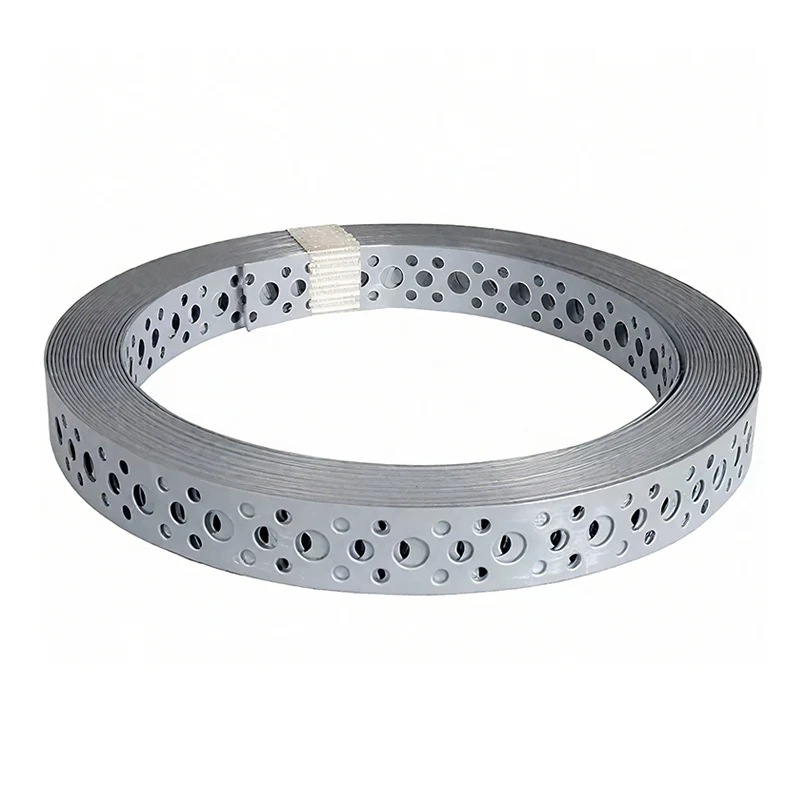
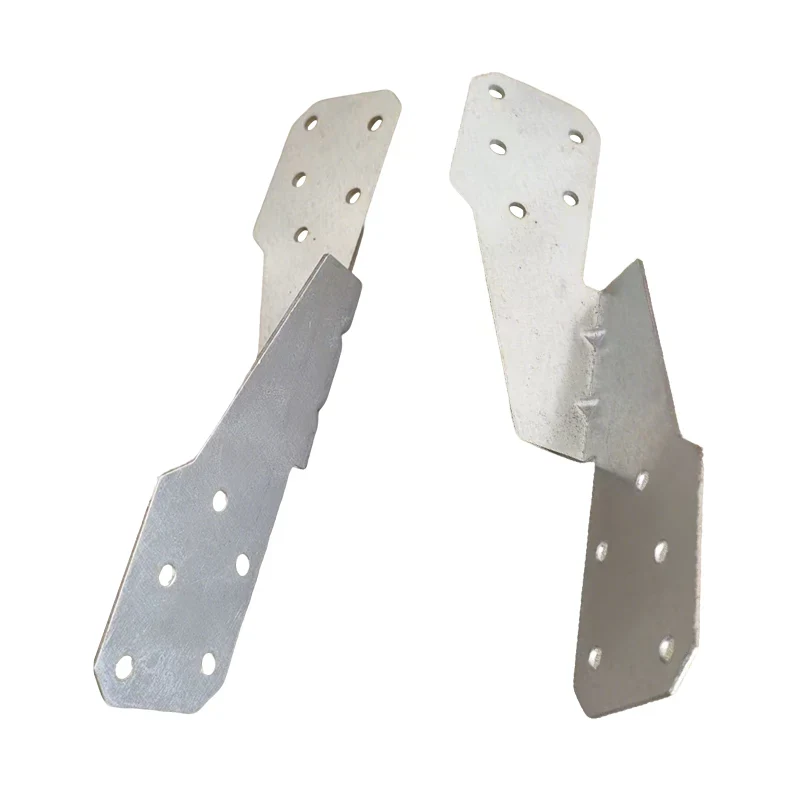
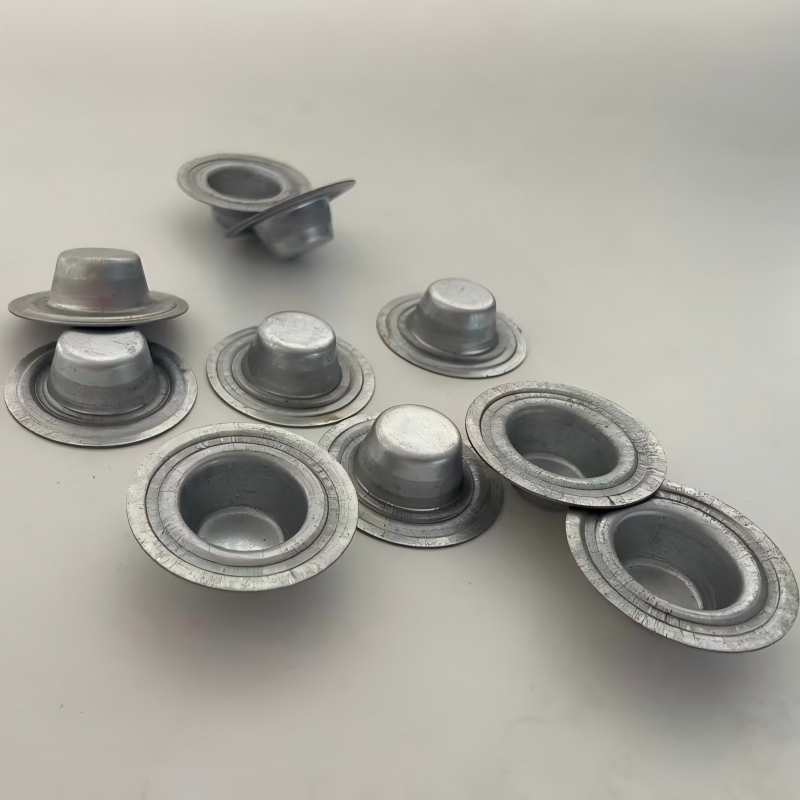
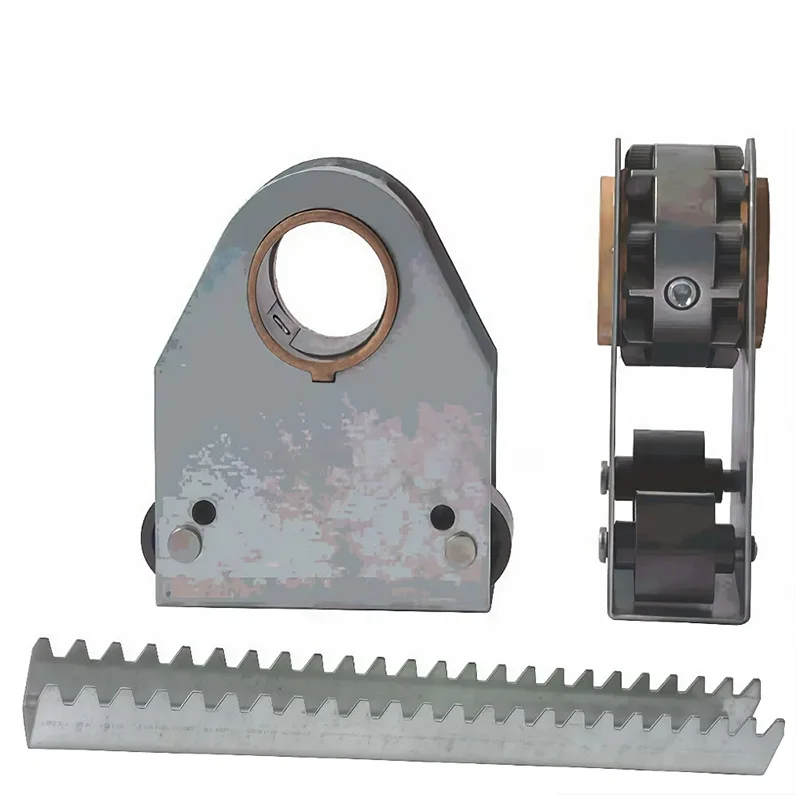
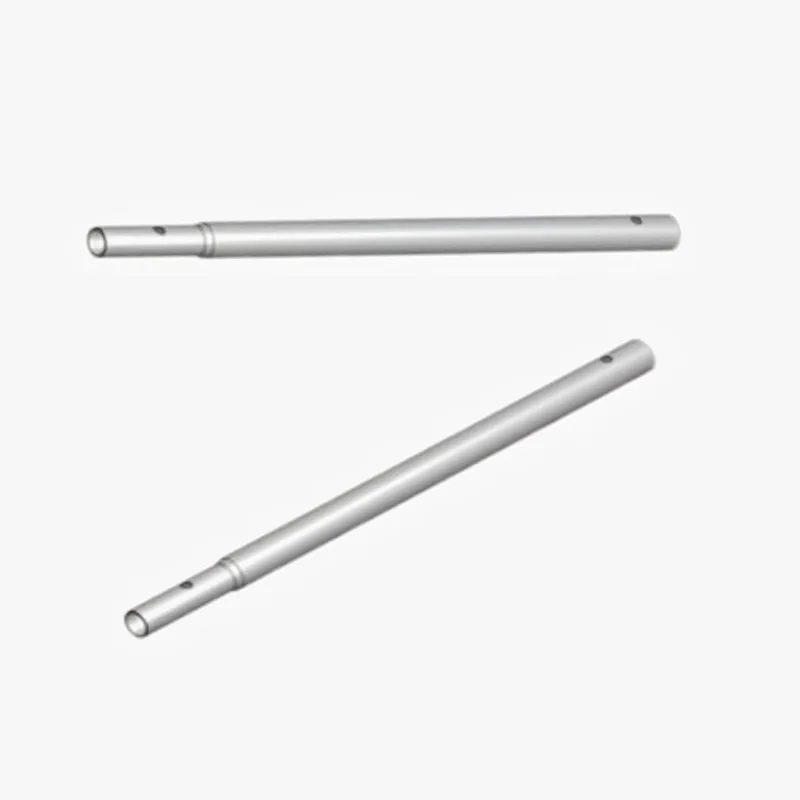
Greenhouse construction is moving toward more modular, efficient, and technically controlled structural systems. As agricultural facilities become more sophisticated, attention is shifting from individual frame members to the way those members interact as a complete structure. Greenhouse Frame Connectors play an important role in this process because they establish the mechanical interface between structural tubes, profiles, braces, and other supporting components.
At first glance, a connector may seem less significant than a rafter, column, or purlin. In practice, however, the performance of a greenhouse depends on how effectively these members work together. A connection must maintain the intended geometry of the frame while transferring loads through the structure and remaining suitable for the humid conditions commonly found in protected cultivation environments.
This makes connection technology an important consideration for greenhouse manufacturers, engineering teams, agricultural facility developers, and metal fabrication companies.
Modern greenhouses are not simply lightweight shelters for plants. They combine structural systems with ventilation, irrigation, environmental control, lighting, shading, crop-support equipment, and other technologies. These systems operate within the same physical structure, creating a need for dependable and accurately assembled framing.
Engineering research has shown that the behavior of structural connections can influence greenhouse analysis, particularly when clamp-based or semi-rigid joints are involved. Treating every joint as completely rigid may not accurately represent the behavior of the finished structure.
For this reason, connection design should be considered during the structural planning stage rather than treated as an afterthought during installation.
Rafters, purlins, columns, braces, and other members cannot provide structural continuity without suitable joining methods. The connection creates the physical interface through which movement and forces are transferred from one component to another.
A properly selected connector should therefore correspond with the geometry and material characteristics of the frame. If the interface is poorly matched, excessive clearance, deformation, localized stress, or unwanted movement may occur during installation or operation.
The significance of connection hardware becomes clearer when a greenhouse contains many repeated joints. A minor inconsistency at an individual connection may appear insignificant when viewed separately. Across a complete structure, however, repeated inconsistencies can affect alignment and assembly quality.
This is particularly relevant to modular greenhouse systems where similar frame sections are installed repeatedly. Consistent connection dimensions help create a more predictable assembly process and reduce the need for field modification.
Greenhouse structures are exposed to changing environmental conditions. Wind pressure, rain, snow, temperature variation, and operational activities can all affect the structural system. Engineering guidance for greenhouse design therefore treats structural components, materials, and environmental loads as interconnected considerations.
The connection between frame members forms part of this load path. Its function is not simply to hold two pieces of metal together. It must help maintain the relationship between connected members as the structure responds to external forces.
Different greenhouse configurations create different structural requirements. A connection between a rafter and purlin may experience a different combination of forces from a joint connecting a brace to a column. The connector configuration should therefore correspond to the intended structural role of the joint.
Joint stability also depends on the fastening method and contact condition between components. A connection that allows excessive movement may affect the behavior of adjacent members, while an excessively restrictive connection may introduce unintended stresses if the overall structure was not designed for that condition.
Manufacturing accuracy has a direct relationship with assembly quality. Connector openings, bends, mounting surfaces, and mating sections need to correspond with the dimensions of the intended frame members.
When components are manufactured consistently, installers can position them with greater confidence. This helps reduce unnecessary adjustment and supports more uniform alignment throughout the greenhouse.
Unlike many conventional outdoor structures, greenhouses frequently operate in environments where moisture is part of normal operation. Irrigation, condensation, cleaning activities, and differences between internal and external temperatures can expose metal components to persistent humidity.
Material selection must therefore address both mechanical requirements and environmental durability. Agricultural engineering guidance notes that steel greenhouse framing generally requires suitable protection against high-moisture conditions, while other framing materials offer different corrosion characteristics.
Corrosion protection is more effective when it is incorporated into product selection and manufacturing rather than added only after a problem appears.
Depending on the application, manufacturers may use galvanized steel, stainless steel, protective coatings, or other surface treatments. The appropriate option depends on the greenhouse environment, surrounding materials, expected exposure, and required service conditions.
Surface protection should also be compatible with the manufacturing process. Cutting, forming, machining, and joining operations can influence the final surface condition of a component, so the complete production route should be considered when developing corrosion-resistant hardware.
Greenhouse structures may combine steel, galvanized components, aluminum profiles, stainless steel fasteners, and other materials. When dissimilar metals are placed together in a moist environment, material compatibility becomes an important engineering consideration.
Designers should evaluate the contact between the connector and the frame rather than considering each material independently. Suitable isolation methods or compatible material combinations can help reduce unwanted corrosion at interfaces.
The reliability of structural hardware is influenced by more than the selected raw material. Cutting accuracy, forming consistency, machining precision, tooling condition, and inspection procedures all contribute to the quality of the finished component.
Modern fabrication technologies allow manufacturers to produce complex metal parts with controlled dimensions. For greenhouse hardware, this can be especially useful when a connector has to match a specific tube profile or frame configuration.
Laser cutting can provide clean and repeatable profiles for sheet metal components. It is particularly suitable for parts requiring defined openings, mounting patterns, or shaped edges.
Consistent cutting geometry can help reduce variation between individual components and make subsequent forming or assembly operations more predictable.
CNC machine tools provide controlled processing for components requiring accurate holes, surfaces, slots, or other machined features. Such capabilities can be valuable when connection hardware must maintain close dimensional relationships with mating components.
Precision machining also supports repeatable production when the same component is manufactured for repeated greenhouse assemblies.
Advanced equipment alone does not guarantee consistent quality. A reliable manufacturing process also requires inspection, process control, equipment maintenance, material verification, and trained personnel.
Inspection procedures can focus on critical dimensions, hole positions, forming accuracy, surface condition, and other characteristics that influence installation. This creates a feedback loop between manufacturing and quality management.
| Manufacturing Factor | Structural Relevance | Quality Focus |
|---|---|---|
| Material selection | Mechanical and environmental suitability | Material verification |
| Cutting accuracy | Consistent component geometry | Profile and opening inspection |
| Forming consistency | Reliable mating with frame members | Shape and dimensional checks |
| Machining precision | Accurate fastening interfaces | Critical feature inspection |
| Surface treatment | Environmental durability | Surface condition assessment |
A structurally suitable connector should also be practical to install. Greenhouse construction frequently involves repeated connections, often under outdoor or partially completed site conditions. Hardware that is difficult to position or requires extensive modification can increase installation complexity.
Connection design should therefore consider the relationship between engineering requirements and practical assembly conditions.
A standardized connection system allows installation teams to follow a repeatable process. When components fit consistently, workers can spend less time correcting dimensional differences between individual joints.
This is particularly useful for modular structures. Repeated frame sections can be assembled according to a consistent sequence, making it easier to maintain alignment across the complete installation.
Fasteners are part of the structural connection and should not be selected independently from the connector. Thread type, material, size, installation method, and corrosion resistance all need to correspond with the surrounding components.
Improper fastening can affect clamping force and joint behavior. Excessive tightening may deform thinner components, while insufficient fastening may allow unwanted movement.
The correct installation method should therefore be established as part of the connection design rather than left entirely to field judgment.
Different greenhouse applications create different requirements for structural hardware. Commercial horticultural facilities may prioritize repeatable construction and long-term durability, while research facilities may require greater adaptability for changing equipment and internal layouts.
Commercial greenhouses commonly contain repeated structural bays and extensive networks of rafters, purlins, braces, and support members. Consistent connections help these repeated elements work together as an organized structural system.
For facilities designed for continuous agricultural production, reliable hardware can also simplify maintenance and replacement activities during the service life of the structure.
Nursery structures and specialty crop greenhouses can have different environmental and operational requirements. The choice of framing material and connection method should reflect local climate, crop conditions, equipment integration, and maintenance practices.
The same connector design should not automatically be applied to every greenhouse project. Application-specific engineering remains important.
Research facilities often require adaptable structural systems because environmental equipment and cultivation methods may change over time. Modular connections can make selected structural modifications more practical.
As controlled environment agriculture develops, the relationship between structural engineering and automated cultivation equipment is becoming increasingly important. Greenhouse planning therefore needs to account for structural, mechanical, environmental, and operational requirements together.
The greenhouse industry is increasingly focused on resource efficiency, automation, controlled growing conditions, and adaptable facility design. These trends are influencing the way greenhouse structures are designed and manufactured.
Recent research into greenhouse structural optimization demonstrates growing interest in coordinating structural geometry, member selection, and overall system performance rather than optimizing individual components in isolation.
Modular construction allows greenhouse sections to be manufactured and assembled according to a repeatable structural concept. Standardized interfaces can make installation more predictable and simplify the replacement of selected components.
This does not mean every project should use identical hardware. Instead, the trend favors connection systems that can be manufactured consistently while remaining adaptable to different frame configurations.
Modern structural analysis increasingly considers the actual behavior of joints rather than assuming every connection behaves identically. Research into semi-rigid greenhouse connections has demonstrated that joint stiffness and deformation behavior can affect structural analysis results.
This development highlights an important principle: connection hardware should be evaluated as part of the structural system. Its geometry, material, fastening method, and mechanical behavior can all contribute to the performance of the finished greenhouse.
Selecting greenhouse connection hardware should begin with the intended structural application rather than with the connector shape alone. Several factors can be reviewed before production or installation begins.
This approach helps connect product selection with actual engineering requirements. It also reduces the risk of choosing hardware based solely on appearance or initial cost.
For precision hardware manufacturers, quality management should cover the complete production process. Raw material handling, machining, laser cutting, forming, inspection, and finished-product control all contribute to final performance.
A structured quality management system can help establish consistent procedures and provide a framework for continuous improvement. For components used repeatedly within a greenhouse structure, production consistency is especially valuable because the same hardware may be installed across many structural joints.
A controlled workflow can reduce variation between production stages. Material is processed according to defined requirements, components are formed or machined using suitable equipment, and finished parts are inspected before shipment.
This manufacturing discipline is particularly important for custom or application-specific metal components, where small dimensional differences may influence assembly compatibility.
Greenhouse projects do not always use identical frame systems. Different tube sizes, profiles, structural arrangements, and installation methods may require customized hardware.
A manufacturer with multiple fabrication capabilities can respond more effectively to these requirements. Precision stamping, wire cutting, CNC machining, laser cutting, and inspection capabilities can provide a broader manufacturing foundation for specialized metal components.
Cangzhou Shengsen Hardware Products Co., Ltd. has developed its manufacturing capabilities around precision hardware and metal fabrication. Established to expand its international business, the company manufactures precision stamping machines and wire-cutting machines and maintains a comprehensive quality management system.
The company produces timber connectors, greenhouse accessories, sheet metal parts, and other hardware components. Its relevant product categories are supported by ISO 9001 quality management certification, while its production capabilities include CNC machine tools, laser cutting equipment, and professional testing instruments.
This combination of fabrication technology and quality control provides a practical foundation for producing structural hardware where dimensional consistency and manufacturing reliability are important.
For greenhouse-related applications, Shengsen can support the production of connection components and other metal hardware according to different structural and fabrication requirements. Its experience across timber connectors, greenhouse accessories, and sheet metal parts also provides a broader understanding of how precision hardware is integrated into practical construction systems.
Greenhouse construction is becoming increasingly integrated with engineering, automation, environmental control, and precision manufacturing. As this development continues, structural hardware will need to meet more than basic assembly requirements.
Future connection systems are likely to place greater emphasis on dimensional accuracy, material compatibility, corrosion resistance, installation efficiency, modularity, and documented quality control.
At the same time, structural analysis is expected to pay greater attention to actual joint behavior. Research into semi-rigid greenhouse connections already demonstrates why the mechanical characteristics of connection systems deserve consideration during structural assessment.
For greenhouse manufacturers and engineering teams, this means that a connection should be evaluated as part of the complete structural system. The right hardware can help maintain frame alignment, support predictable assembly, accommodate environmental exposure, and contribute to consistent structural performance.
Greenhouse Frame Connectors are therefore more than simple joining accessories. They represent an important interface between structural design and manufacturing technology. When the connector geometry, material, fastening method, and production quality are properly coordinated, the resulting greenhouse structure can achieve a more controlled and reliable assembly process.
With precision fabrication capabilities, advanced CNC and laser processing equipment, professional testing instruments, and a structured quality management approach, Cangzhou Shengsen Hardware Products Co., Ltd. provides a manufacturing option for companies seeking dependable greenhouse hardware and customized metal components. Its experience in greenhouse accessories, timber connectors, and sheet metal fabrication enables Shengsen Hardware to support diverse structural hardware requirements while maintaining a strong focus on manufacturing consistency and practical application.