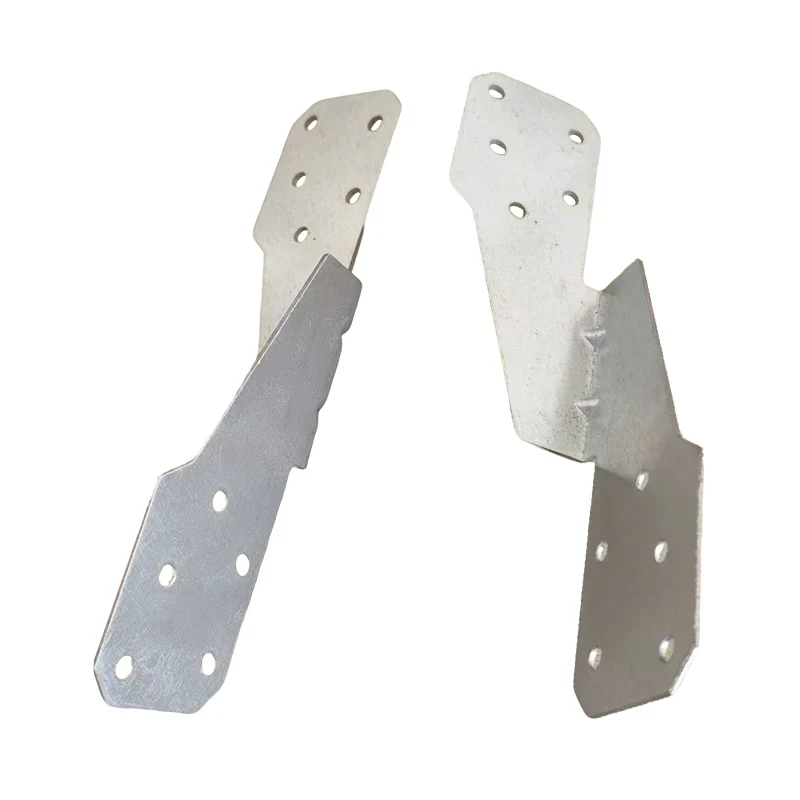
Two identical brackets arrive at a quality inspection station. Both are made from the same 2 mm stainless steel, both are formed to the same dimensions, and both are welded along the same joint. The first bracket passes the fatigue test after 500,000 cycles. The second bracket develops a crack at the weld toe after 120,000 cycles. The difference is not the material, the design, or the operator. The difference is the welding process. The first bracket was laser welded. The second was welded with a conventional TIG process. For procurement managers sourcing Sheet Metal Fabrication Parts, this distinction matters. The welding process determines the heat input, the weld bead geometry, the heat-affected zone, and the residual stress. These factors, in turn, determine the durability of the part in service. Laser welding is not simply a faster process. It is a process that produces a stronger, more reliable weld with less distortion.
This guide is written for buyers who need to evaluate laser welding for Sheet Metal Fabrication Parts. We will explain how laser welding works, why it produces a more durable weld than conventional processes, how the reduced heat input protects the material properties, how the narrow weld bead improves fatigue performance, and what specifications to include in a purchase order. We will also provide detailed product parameters from our factory at Cangzhou Shengsen Metal Products Co., Ltd. Whether you are sourcing welded enclosures, brackets, frames, or chassis components, this guide will help you understand why laser welding is a durability advantage and how to specify it correctly.
Laser welding is a process that uses a focused beam of light to melt and join metal. The beam is generated by a laser source, typically a fiber laser or a disk laser, and delivered to the workpiece through a fiber optic cable and a focusing lens. The focused spot is very small—typically 0.2 to 0.6 mm in diameter—and the energy density is very high. This allows the laser to melt the metal quickly and with minimal heat input to the surrounding material. Conventional welding processes, such as TIG or MIG, use an electric arc to melt the metal. The arc is much larger than a laser spot, and the heat input is much higher. The table below compares laser welding with conventional TIG welding.
| Parameter | Laser Welding | TIG Welding |
| Heat Source | Focused laser beam | Electric arc |
| Spot Size | 0.2 - 0.6 mm | 2 - 4 mm |
| Heat Input | Low | High |
| Weld Bead Width | 0.5 - 1.5 mm | 3 - 6 mm |
| Heat-Affected Zone | Narrow (0.1 - 0.5 mm) | Wide (2 - 5 mm) |
| Welding Speed | High | Low |
| Distortion | Low | High |
At Cangzhou Shengsen Metal Products Co., Ltd., our factory uses fiber laser welding systems for the production of Sheet Metal Fabrication Parts. We have invested in high-power laser sources and precision motion systems to ensure consistent weld quality. Our engineering team can help you evaluate whether laser welding is the right process for your specific part and application.
The heat input of a welding process determines how much the material is affected by the weld. In conventional welding, the high heat input creates a wide heat-affected zone (HAZ) where the material's microstructure is altered. In stainless steel, this can lead to sensitization—the precipitation of chromium carbides at the grain boundaries, which reduces the material's corrosion resistance. In high-strength steels, the HAZ can become brittle, reducing the fatigue life of the part. In aluminum, the HAZ can lose strength due to over-aging. Laser welding, with its low heat input, minimizes the HAZ and preserves the material's properties. The table below summarizes the effect of heat input on different materials.
| Material | Effect of High Heat Input (TIG) | Effect of Low Heat Input (Laser) |
| Stainless Steel | Sensitization, reduced corrosion resistance | Minimal sensitization, preserved corrosion resistance |
| High-Strength Steel | Brittle HAZ, reduced fatigue life | Narrow HAZ, preserved fatigue life |
| Aluminum | Over-aging, strength loss | Minimal over-aging, preserved strength |
| Galvanized Steel | Zinc coating damage, corrosion risk | Minimal coating damage |
At our factory, we use laser welding to preserve the properties of the materials we work with. For stainless steel parts, we verify that the weld does not cause sensitization by performing corrosion testing on sample coupons. For high-strength steel parts, we verify that the HAZ hardness is within the acceptable range. Our goal is to ensure that the weld does not become the weakest point in the part.
Fatigue failure in welded parts typically starts at the weld toe, where the weld bead meets the base metal. The geometry of the weld toe creates a stress concentration. A wider weld bead with a gradual transition has a lower stress concentration, but it also has a larger HAZ and more residual stress. A narrow weld bead, such as that produced by laser welding, has a smaller stress concentration and a smaller HAZ. The result is a weld that is more resistant to fatigue crack initiation. The table below compares the fatigue performance of laser-welded and TIG-welded joints.
| Parameter | Laser-Welded Joint | TIG-Welded Joint |
| Weld Bead Width | 0.5 - 1.5 mm | 3 - 6 mm |
| Stress Concentration Factor | Low | Higher |
| Fatigue Life (relative) | 2 - 3x longer | Baseline |
| Typical Failure Location | Base metal (if weld is properly executed) | Weld toe |
At Cangzhou Shengsen Metal Products Co., Ltd., our factory uses laser welding to produce joints with a narrow, consistent weld bead. We control the welding parameters—laser power, welding speed, focal position, and shielding gas—to ensure that the weld toe geometry is optimized for fatigue resistance. We also perform fatigue testing on representative samples to verify the performance of our welds. Our goal is to provide our customers with Sheet Metal Fabrication Parts that have a long, reliable service life.
Distortion is a common problem in welded Sheet Metal Fabrication Parts. When the weld cools, it contracts and creates residual stress that can distort the part. The distortion can affect the fit of the part, the alignment of the assembly, and the performance of the final product. In severe cases, the distortion can cause cracks or premature failure. Laser welding minimizes distortion because the heat input is low and the weld is narrow. The part stays flatter, the dimensions stay within tolerance, and the residual stress is lower. The table below compares the distortion characteristics of laser welding and TIG welding.
| Parameter | Laser Welding | TIG Welding |
| Heat Input | Low | High |
| Residual Stress | Low | High |
| Distortion | Minimal | Significant |
| Post-Weld Straightening | Rarely required | Often required |
| Dimensional Accuracy | High | Moderate |
At our factory, we use laser welding to minimize distortion and maintain the dimensional accuracy of our Sheet Metal Fabrication Parts. We also use fixturing and clamping to hold the parts in position during welding. For parts that require additional stress relief, we offer post-weld heat treatment. Our goal is to provide our customers with parts that fit correctly and perform reliably.
When purchasing laser-welded Sheet Metal Fabrication Parts, the buyer should include detailed specifications in the purchase order to ensure that the product meets the required performance and quality standards. The key specifications are the material, the thickness, the weld type, the weld penetration, the weld width, the heat-affected zone, and the inspection method. The material should be specified by grade. The thickness should be specified in millimeters. The weld type should be specified (e.g., butt weld, lap weld, fillet weld). The weld penetration should be specified as a percentage of the material thickness. The weld width should be specified in millimeters. The heat-affected zone should be specified as a maximum width. The inspection method should be specified (e.g., visual, dye penetrant, X-ray). The table below summarizes the specifications that should be included in a purchase order.
| Specification | Unit of Measure | Example |
| Material | Grade | 304 stainless steel |
| Thickness | mm | 2.0 mm |
| Weld Type | Type | Butt weld |
| Weld Penetration | % of thickness | 100% |
| Weld Width | mm | 1.0 mm max |
| Heat-Affected Zone | mm | 0.5 mm max |
| Inspection Method | Type | Visual + dye penetrant |
At our factory, we work with our customers to ensure that all specifications are clearly defined and understood before production begins. We provide samples and weld coupons for approval. Our quality control system includes inspection of raw materials, in-process inspection, and final inspection before shipment. Our goal is to deliver Sheet Metal Fabrication Parts that meet or exceed our customers' expectations.
Evaluating a supplier of laser-welded Sheet Metal Fabrication Parts requires a focus on laser equipment, welding expertise, quality control, and testing capability. The supplier must have the right laser equipment for the material and thickness. They must have the expertise to develop and maintain the welding parameters. They must have a quality control system that ensures consistent weld quality. And they must have the testing capability to verify the performance of the welds. The table below summarizes the evaluation criteria.
| Evaluation Criterion | What to Look For | Why It Matters |
| Laser Equipment | Fiber laser, power range, motion system | Ensures capability for the material and thickness |
| Welding Expertise | Parameter development, weld qualification | Ensures consistent weld quality |
| Quality Control | In-process monitoring, weld inspection | Ensures every part meets specification |
| Testing Capability | Destructive testing, fatigue testing | Verifies weld performance |
| Project Experience | Industrial references, similar applications | Demonstrates capability and reliability |
At Cangzhou Shengsen Metal Products Co., Ltd., our factory has been producing laser-welded Sheet Metal Fabrication Parts for over a decade. We have a range of fiber laser systems to suit different materials and thicknesses. We have a team of welding engineers who develop and qualify the welding parameters for each application. We have a quality control system that includes in-process monitoring and final inspection. And we have a testing laboratory that performs destructive and fatigue testing on representative samples. We invite you to evaluate us against these criteria and to consider us as your partner for laser-welded Sheet Metal Fabrication Parts.
The following table provides the key product parameters for our laser-welded Sheet Metal Fabrication Parts. These parts are suitable for a wide range of industrial applications, including automotive, aerospace, medical, and general manufacturing. Our factory can also produce custom parts to meet specific requirements.
| Parameter | Specification Range | Notes |
| Material | Stainless Steel, Carbon Steel, Aluminum, Galvanized Steel | Selected for application |
| Thickness Range | 0.5 - 6.0 mm | Depends on material and laser power |
| Weld Type | Butt, Lap, Fillet, Corner | Selected for joint design |
| Weld Penetration | Up to 100% | Depends on joint type |
| Weld Width | 0.5 - 1.5 mm | Narrower than TIG |
| Heat-Affected Zone | 0.1 - 0.5 mm | Minimized for material preservation |
| Welding Speed | Up to 10 m/min | Depends on material and thickness |
| Inspection | Visual, Dye Penetrant, X-Ray | Selected for criticality |
| MOQ | 100 pieces | Negotiable for large orders |
| Lead Time | 2 - 4 weeks | Depends on quantity and complexity |
At our factory, we manufacture our laser-welded Sheet Metal Fabrication Parts to meet these specifications and more. We can customize the material, thickness, weld type, and inspection method to suit your specific requirements. Our quality control system includes inspection of raw materials, in-process inspection, and final inspection before shipment. Our goal is to provide our customers with high-quality Sheet Metal Fabrication Parts that meet their performance requirements.
Question 1: How does laser welding improve the fatigue life of sheet metal parts?
Answer: Laser welding produces a narrow weld bead with a small heat-affected zone and a low stress concentration at the weld toe. Fatigue failure typically starts at the weld toe, where the stress is highest. The narrow, smooth transition of a laser weld reduces the stress concentration and delays crack initiation. In many applications, laser-welded joints show two to three times the fatigue life of TIG-welded joints. At Cangzhou Shengsen Metal Products Co., Ltd., we verify this performance through fatigue testing on representative samples.
Question 2: Can laser welding be used on galvanized steel?
Answer: Yes, laser welding can be used on galvanized steel, but the zinc coating must be managed. The zinc vaporizes at the welding temperature and can cause porosity if it is trapped in the weld. To avoid this, the welding parameters must be optimized to allow the zinc vapor to escape, or the coating must be removed from the weld zone before welding. Our factory has experience with laser welding of galvanized steel and can advise on the best approach for your application.
Question 3: What is the maximum thickness that can be laser welded?
Answer: The maximum thickness depends on the laser power and the material. For stainless steel and carbon steel, a 6 kW fiber laser can weld up to 6 mm in a single pass. For thicker materials, multi-pass welding or a higher-power laser is required. For aluminum, the maximum thickness is typically lower due to the material's high reflectivity and thermal conductivity. Our factory can advise on the best process for your specific material and thickness.
Question 4: Does laser welding require post-weld heat treatment?
Answer: In most cases, laser welding does not require post-weld heat treatment because the heat input is low and the residual stress is minimal. However, for certain materials and applications—such as high-strength steels or thick sections—post-weld heat treatment may be specified to relieve residual stress and improve toughness. Our engineering team can advise on whether heat treatment is required for your specific part.
Question 5: How do I know if a supplier has the right laser welding capability for my part?
Answer: Ask the supplier about their laser equipment (power, type, motion system), their experience with your material and thickness, their parameter development process, and their testing capability. A capable supplier will be able to provide weld coupons for approval, demonstrate their inspection methods, and show references from similar applications. At Cangzhou Shengsen Metal Products Co., Ltd., we provide all of this information to our customers during the evaluation process.
Laser welding enhances the durability of Sheet Metal Fabrication Parts by reducing heat input, preserving material properties, minimizing distortion, and producing a narrow, fatigue-resistant weld bead. These advantages are not incremental; they are fundamental to the performance of the part in service. For procurement managers, selecting a supplier with the right laser welding capability is a critical decision that affects the reliability and longevity of the final product. At Cangzhou Shengsen Metal Products Co., Ltd., our factory has the laser equipment, welding expertise, quality control, and testing capability to deliver high-quality laser-welded parts. We work closely with our customers to ensure that every part meets their performance requirements.
Whether you are sourcing welded enclosures, brackets, frames, or chassis components, we invite you to contact us to discuss your requirements. We can provide samples, weld coupons, and technical data. Our commitment to quality and customer satisfaction has made us a trusted partner for industrial manufacturers around the world.
Contact Cangzhou Shengsen Metal Products Co., Ltd. today to discuss your laser-welded Sheet Metal Fabrication Parts requirements and discover how our process can improve the durability of your products.